
Halloween decorating for apartments, condos, and small spaces
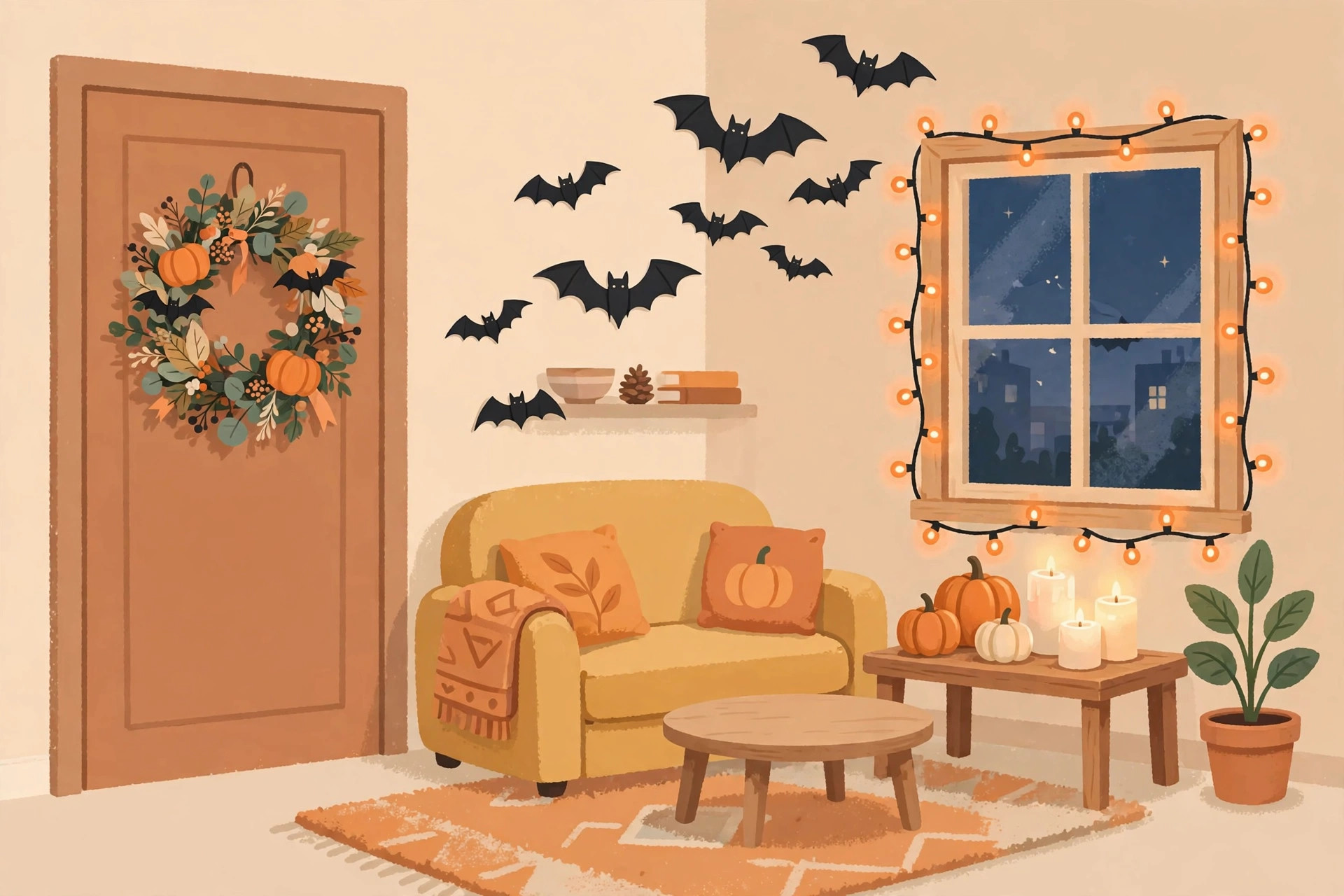
A house Halloween display spreads across a yard, a porch, and a garage's worth of storage. An apartment display gets a door, a window, maybe a balcony — and a lease. That constraint is not a downgrade; it is a design brief. Small-space decorating works when every piece is chosen by zone, attaches without damage, lights without flame, and stores in a single bin when November arrives. This guide builds the display in that order: zones first, attachment second, fire safety as the non-negotiable frame, then a setup and takedown procedure that leaves the unit exactly as rented.
The zone framework: spend impact where square footage is free
In a small unit, floor space is the scarcest material you own, so the display should live everywhere except the floor. Rank the zones by impact per square foot and decorate in this order — most rentals can stop after zone two and already look finished from the hallway and the street.
| Zone | What goes there | Why it ranks here |
|---|---|---|
| 1. Door and entry | A wreath, removable door decor, a small mat-side pumpkin with an LED candle | The only zone every visitor and neighbour sees; when walls cannot be painted or hold heavy items, windows and the front door carry the whole display |
| 2. Windows | Removable window clings, silhouettes, a string of lights in the frame | Visible from outside at night and atmospheric from inside; clings use no adhesive and leave nothing behind |
| 3. Walls and ceiling lines | Paper bats, garlands, floating hats, cobwebs in corners | Vertical decorating is the small-space multiplier — walls, doors and ceilings hold the display while counters and floors stay clear |
| 4. Tabletop and shelves | Mini jack-o'-lanterns, tiny LED candles, potion-bottle jars, themed textiles (pillow covers, throws, kitchen towels) | Miniature pieces create atmosphere without monopolizing surfaces, and textiles double as decor and household items — decoration that earns its storage space |
| 5. Balcony | One focal display: railing string lights, a spider web, a small pumpkin cluster | High effort-to-impact once inside zones are done; on a small balcony one clear focal point beats scattered pieces, every time |
Lighting is the thread through every zone. Warm orange or purple string lights, battery fairy lights, and LED candles transform a room without a single bulky prop — in a studio, swapping the light may be the entire display, and it can be enough. Projected shadows and coloured light read as decoration from across the street while occupying zero shelf space and storing in a drawer.
Attachment methods compared: what holds, what damages
Most apartment leases prohibit drilling or permanent fixtures, so the attachment method is a decorating decision, not an afterthought. Choose per zone:
| Method | Holds | Damage risk | Best zones |
|---|---|---|---|
| Removable hooks and strips | String lights, lightweight garlands, paper bats | Low when removed as directed; the standard swap for nails | Walls, doors |
| Window clings and decals | Silhouettes and scenes on glass | None — static-held, no adhesive | Windows, mirrors, patio doors |
| Double-sided and painter's tape | Paper decor, lightweight fabric | Low on sound paint; test a hidden spot first | Walls, entry |
| Zip ties | Railing lights, webs, lightweight fabric | None to the railing; remove fully at takedown | Balcony |
| Over-door hooks and tension | Wreaths, hanging figures | None; check the door still closes and latches | Door |
| Nails, screws, drilling | Heavy items | High — typically prohibited by the lease; skip entirely for seasonal decor | None |
Two habits protect the deposit better than any product: photograph each wall and door before decorating, so the before-state is documented, and keep every package and removal instruction until takedown is done. When a rule is genuinely unclear — corridor-facing decor, balcony restrictions, building quiet hours for a display with sound — asking the landlord or condo management first is the cheap move; buildings vary, and the answer takes one email.
Fire safety is the design brief in a small space
Small spaces concentrate two things: decorations and heat sources end up closer together, and exits are fewer. The data behind the caution is not abstract. The National Fire Protection Association reports that between 2018 and 2022, an annual average of 835 home structure fires began with decorations, causing three deaths, 30 injuries, and $14 million in direct property damage — nearly half, 47 percent, because decorations sat too close to a heat source, and about one-third started with candles. In a one-bedroom, too close is the default distance unless it is designed against. The working rules:
- Flameless everywhere. Battery-operated LED candles, fairy lights and pumpkin lights give the same glow as candles with none of the open-flame hazard — glow sticks or electric candles are the safest jack-o'-lantern light — and they are safer still around kids and pets.
- Respect heat sources. Keep flammable decorations — cornstalks, crepe paper, dried flowers, paper bats — away from open flames and from heat sources including light bulbs and heaters. In a small unit, check the heater and baseboard line before hanging anything.
- Exits stay clear, always. Nothing blocks the unit door, the path to it, or a window that serves as an escape route. Seasonal clutter goes on walls, never in the exit path.
- Electrical discipline. Housing fire-safety guidance is blunt: do not overload outlets or power bars, replace damaged cords, never run cords under rugs or furniture, and keep electrical panels clear. Warning signs — hot plugs or cords, flickering lights, burning smells — mean the display comes down, not that it gets one more night.
- Balcony restraint. Keep balconies clear of flammable materials, never store propane on a balcony, and secure lightweight decorations against wind so a gust does not deliver them to a neighbour's balcony — or the street.
The setup and takedown procedure
- Walk the unit and pick zones. Use the framework above; decide the display's full extent before buying anything. Measure nothing — count surfaces instead: one door, how many windows, one tabletop, one balcony rail.
- Photograph the before-state of every surface you will touch, then test one removable hook in a hidden spot and wait a day.
- Install top-down: ceiling lines and walls first, then windows and door, then tabletop, then balcony. Keep pathways and the exit route clear at every stage — move through the unit as a guest would, in the dark, before calling it done.
- Run the safety pass: every light battery-powered, every flammable piece clear of heaters and bulbs, no cord under a rug, no outlet overloaded, exits untouched. Check that pets cannot reach dangling strings or small pieces they could swallow.
- Takedown in reverse, in daylight, within the first days of November: remove hooks by their release method (never pull straight out), roll lights instead of stuffing them, and store the whole display in one labelled bin. Photograph the after-state against your before photos.
Handing out candy when you have no porch
Apartment trick-or-treating runs on building culture, so read yours first: some buildings organize lobby or door-to-door hours, some use a door sign or a pumpkin on the mat as the opt-in signal, and some skip it entirely. If your building participates, the door zone does the work — a wreath or cling tells families your unit is handing out, and a small table inside the door keeps the hallway clear. Keep walkways and the corridor free of cords and props either way: in a building, your display's trip hazard is your neighbour's exit route. If the building does not participate, the window and balcony zones still carry the celebration to the street — which, in a small space, was most of the point anyway.
FAQ
What is the single highest-impact purchase for a small space? One string of battery-powered warm-orange or purple lights. It works in every zone, needs no flame and no outlet if battery-run, stores in a drawer, and does more atmosphere work per dollar and per square foot than any prop.
Can a real pumpkin work in an apartment? Yes, as a tabletop or balcony piece with an LED candle inside instead of a flame — small clusters read better than many scattered pumpkins on a balcony, and an uncarved painted pumpkin avoids both the mess and the short carved lifespan in a warm unit.
How much should a studio display cost in storage? One bin. If the display cannot store in a single bin or tote, it is too big for the space it decorates — textiles and clings fold flat, lights coil, and paper decor recycles, so a one-bin rule is a realistic design constraint, not a sacrifice.
Keep readingNext: decor trends — layered lighting →